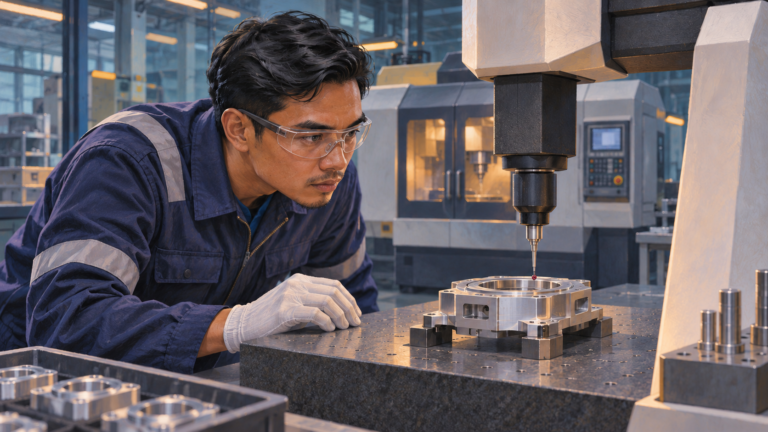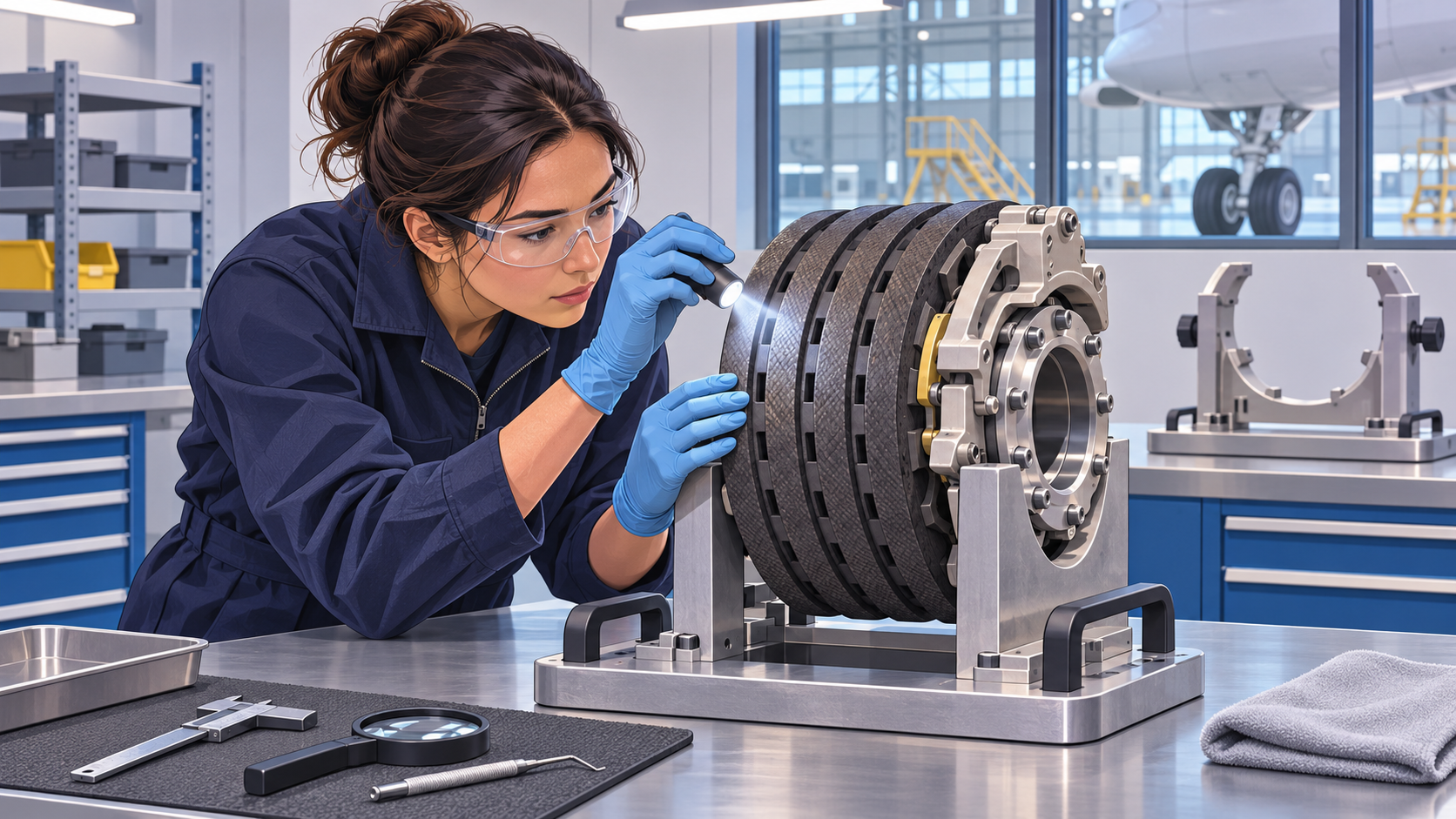

Safran Landing Systems has expanded its carbon brake manufacturing facility in Sendayan and opened a maintenance, repair and overhaul centre in nearby Nilai. Both milestones were announced on 28 October 2026. The pairing gives aerospace employers in Malaysia a concrete example of how manufacturing and repair can share a regional supply chain while needing different kinds of workforce capacity.
Safran’s announcement describes a €134 million expansion in Sendayan, adding space for a textile line, carbonisation furnaces and machining. Nilai’s €2 million centre sits near Kuala Lumpur International Airport, about 20 kilometres from Sendayan. It receives both new and refurbished carbon brake discs from the Sendayan site.
Two sites with different workloads
Manufacturing and repair draw on some of the same technical knowledge. Their workloads behave differently. A factory can organise disc production in batches around equipment capacity, process steps and planned maintenance. A repair centre starts with items returning from service. The timing, condition and work each item needs may vary. The difference matters when employers decide which staff can be shared across a network and which roles need stable coverage at one location.
The repair team needs enough capacity to inspect incoming work and identify exceptions early. The manufacturing site needs to balance its planned production with the demands of the refurbishment work described in the announcement. When one team sees only its own workload, a shortage can travel downstream in the form of a longer wait for a serviceable component.
That is where the handover matters. A transfer between two nearby sites can be fast, but the receiving team still needs to know a component’s status, which checks are complete and whether a technical question needs to go back to the sending site. Adding equipment at either end does little for a queue of unresolved questions between them.
What the workforce projection can tell employers
The Malaysian Investment Development Authority’s release reports that Safran aims to double Sendayan’s carbon brake disc capacity by 2028 and reach 220 employees in Malaysia by 2030 across its industrial and repair operations. The announcement identifies a current Sendayan workforce of 160. The 220 figure covers a wider scope, so the difference between the two numbers cannot be read as a vacancy count.
Aerospace employers working alongside a similar expansion can map their skills against three distinct workloads. One is steady production. Another is demand arriving from components already in service. The third is investigation and disposition when an item needs an engineering or quality decision. That third workload can be easy to undercount because each case may involve people assigned to different departments.
For a supplier, the question to ask during workforce planning is which handover it can reliably complete on every shift. Can it provide a full component record and flag exceptions before material leaves? Can the receiving site resolve routine questions without waiting for the only person who knows the original process? Those questions reveal coverage gaps more precisely than a combined headcount target.
The opening in Nilai gives Malaysia a closer link between making and servicing these components. How much value that proximity creates will depend partly on whether the two operations can hand work over with the information and skills needed to keep it moving.
Hiring for aerospace manufacturing or MRO? Contact Us to discuss the technical and quality roles your team needs.