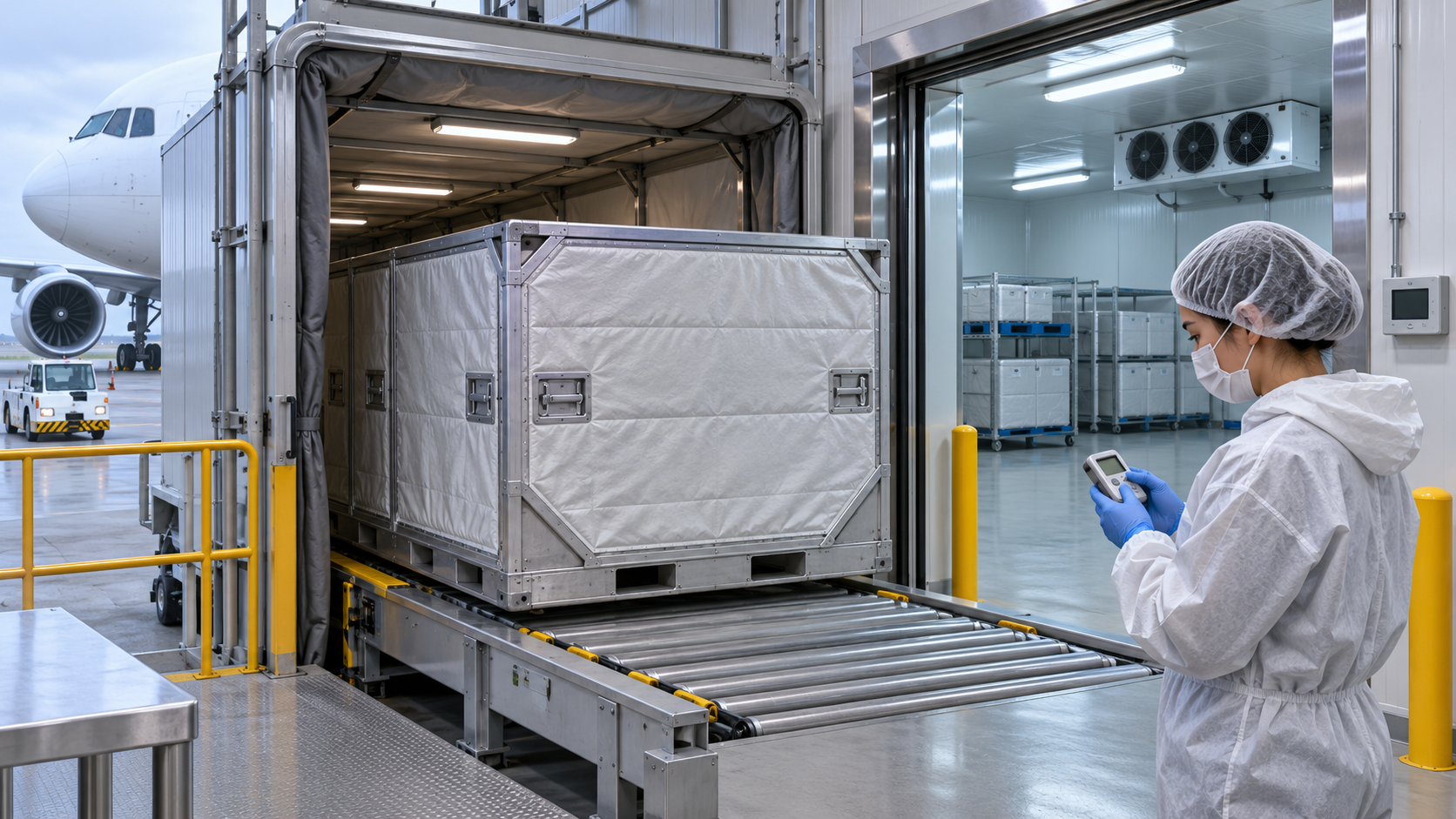

DHL Global Forwarding plans to open a dedicated healthcare cold-chain facility at Changi Airport in late 2027. Direct airside access is a central part of the design. For pharmaceutical shippers and freight employers, its value will depend partly on whether the people at each handover can confirm the shipment’s condition and act when information is missing.
Changi Airport Group’s September announcement locates the planned hub at Changi Nexus One in the Changi Airfreight Centre. DHL’s announcement specifies a S$22 million facility with 3,047 square metres of temperature-controlled space and dedicated handling environments of 2°C to 8°C and 15°C to 25°C. Those are facility capabilities described in the plan. The handling conditions for a particular consignment depend on its product and lane requirements.
The room is controlled. The transfer needs an owner
Cold-chain performance depends on more than whether a facility can hold its set temperature. Consider an inbound shipment moving from an aircraft to a controlled room and then to a vehicle for onward delivery. There may be multiple custody changes and waiting periods. A trained person at each point needs to know which record confirms the handover, how to spot a monitoring gap and which quality contact can make a decision when the shipment needs to be held.
Direct airside access can help reduce exposure during a transfer. It does not answer who can respond if a logger is unreadable, a vehicle arrives late or two parties disagree over when custody changed. Those responsibilities can be harder to resolve when the shipment crosses from one provider or shift to another.
DHL said its teams receive training in temperature-controlled handling, quality management and good distribution practice. The planning implication for employers is to verify that the training reaches the roles working at the actual handovers. Training a warehouse receiving team does little for a delay that occurs while a shipment is still waiting on the other side of a transfer.
Build coverage around the lane
Shippers and logistics providers can begin by reviewing a single shipment lane with a known product temperature profile. Mark the transfer points, list the evidence exchanged at each one and check who is available to respond across the hours when the lane operates. Quality teams can define how a potential deviation is escalated under the relevant product and customer procedures, while operations teams determine whether staff on duty can gather the needed information promptly.
An employer deciding between more handling headcount and deeper quality coverage can then compare the causes of delays. A queue created by too few handlers is a different problem from consignments sitting in a holding area while the authorised decision-maker is unavailable. Both show up as dwell time, but they call for different investments.
The planned Changi facility adds infrastructure to a growing healthcare freight network. Employers can use the lead time to make sure a shorter physical route is backed by a clear chain of custody, decision authority and shift coverage.
Hiring for Supply Chain & Logistics roles in both Singapore or Malaysia? Contact Us to discuss your operations and quality hiring needs.