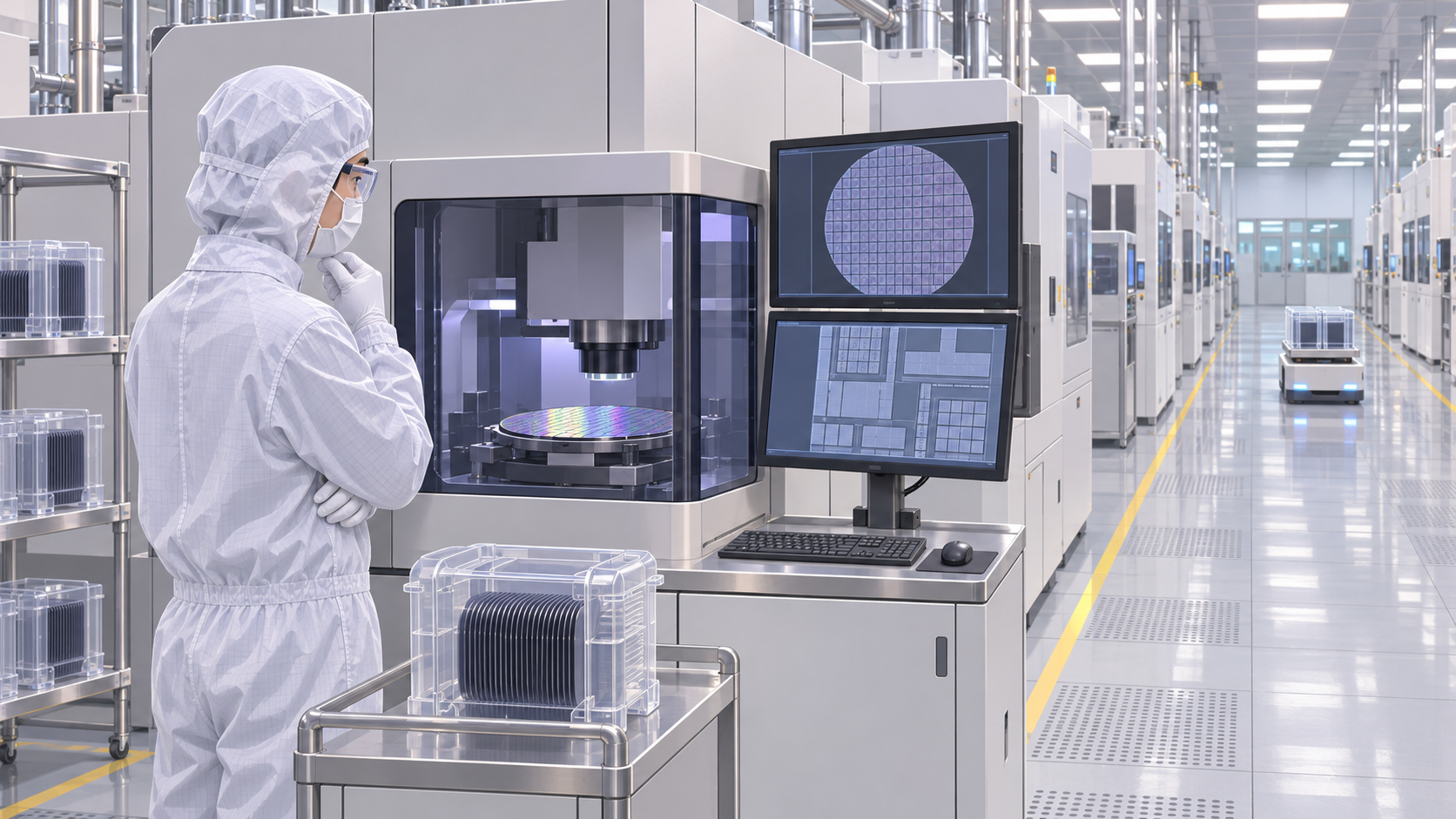

Applied Materials says its S$600 million Tampines campus in Singapore is already in volume production and more than doubles its local advanced cleanroom capacity. The site makes equipment used by chip manufacturers. Its value as a workforce case study lies in how it combines autonomous material movement, assembly and testing with human decisions about quality and maintenance.
Applied Materials’ June 2026 announcement describes mobile robots, automated assembly and test systems, and AI-assisted inspection. It also identifies augmented and virtual reality tools for technician training and precision maintenance. Singapore EDB’s account places the site within the company’s broader manufacturing and research expansion. Neither release publishes a breakdown of who resolves each type of exception on the factory floor.
An inspection alert starts a decision
An automated inspection system can identify an item that differs from an expected pattern. Someone still needs to decide whether the item presents a product issue, whether the measurement system itself needs attention, and what work can continue while the exception is open. A plan that specifies only who watches the screen leaves those decisions unassigned.
Manufacturers can separate three pieces of work. The first is recognising that an issue has occurred. The second is diagnosing the likely cause. The third is deciding whether to release, hold or investigate affected items under the company’s quality rules. Each requires a different level of access, training or authority. An equipment technician may have the information needed to diagnose a sensor fault, while a quality engineer may own disposition of the product already inspected.
The same distinction applies when a robot stops delivering material or a tester starts rejecting otherwise normal assemblies. The operator should know what to preserve from the event, who is authorised to intervene and how to prevent the next shift from inheriting an unexplained queue. That makes the escalation path part of production design.
Give shift coverage the same attention as installation
For Singapore employers planning similar deployments, one way to identify a workforce gap is to review recent stop events before expanding the system. Separate routine recoveries from events that needed controls, equipment or quality expertise. Then check which decisions could actually be made on each shift. A factory can have enough engineering staff in total and still have too few people available when a particular class of incident recurs.
Training technology can make it easier for technicians to practise a maintenance task. A supervised sign-off then gives managers a way to check whether the technician can recognise an abnormal condition and work safely within the site’s procedures. Investment in training content and investment in permission to act need their own milestones.
The Tampines campus is a case of expanded equipment manufacturing capacity already in use, as described by Applied Materials. Its broader lesson for employers is narrower than any job forecast. When machines handle more of the normal production sequence, a plant needs to be explicit about who owns the abnormal one.