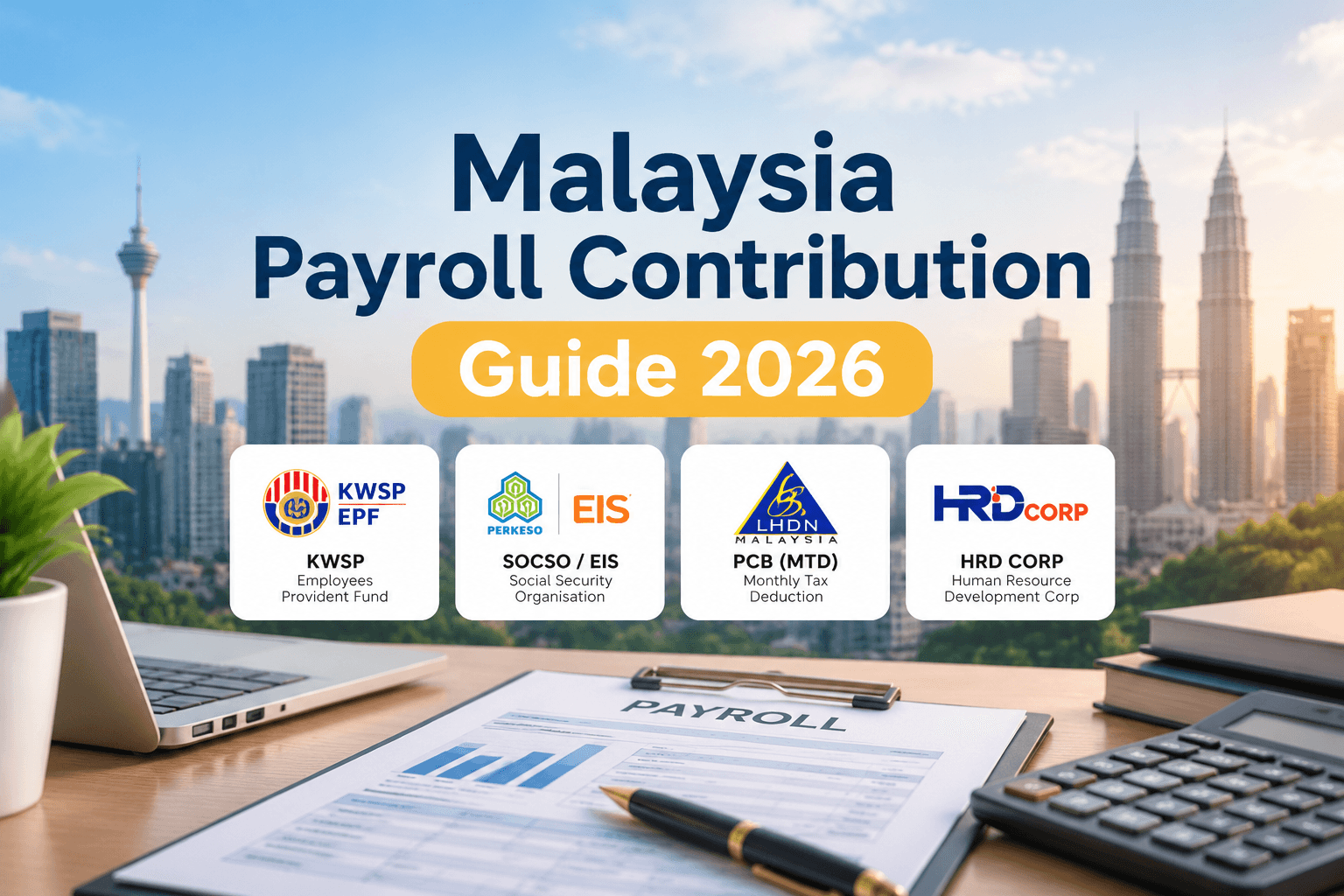

A practical Malaysia payroll guide 2026 explaining EPF, SOCSO, EIS, PCB and HRD Corp treatment for salary, bonuses, allowances and incentives.
Why Payroll Classification Matters
Payroll is more than just salary calculation. It is a critical compliance function that directly affects your organisation’s legal standing, employee relationships, and operational efficiency.
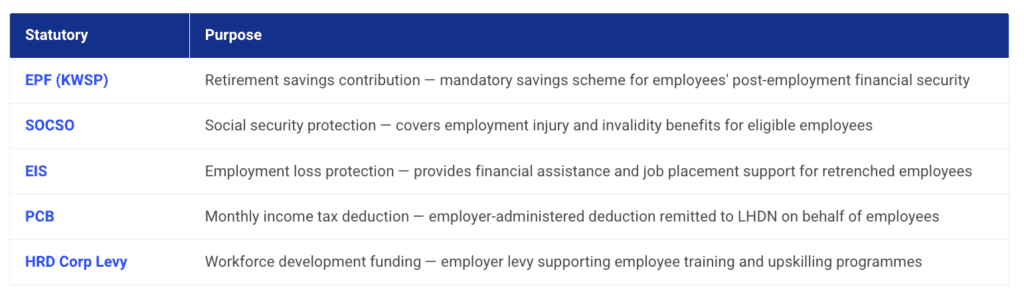
Every payment made to employees may have different treatment under:
Incorrect classification may lead to:
⚠ Payroll errors
⚠ Compliance risks
⚠ Employee disputes
⚠ Audit adjustments
Understanding payroll treatment helps HR teams build accurate and compliant compensation structures.
EPF (KWSP): Employees Provident Fund — Retirement Savings Protection
Purpose
EPF is Malaysia’s mandatory retirement savings scheme. Eligible employers and employees contribute according to applicable EPF contribution rates and wage definitions.
Key Principle
Treatment depends on payment classification and applicable EPF requirements. Employers should refer to the latest EPF wage definition and applicable exemptions when determining contribution treatment.

SOCSO & EIS: Social Security Organisation & Employment Insurance System
SOCSO — Social Security Protection
SOCSO provides protection to employees against employment-related risks, including workplace accidents, occupational diseases, and invalidity. Contributions are shared between employer and employee, with rates determined by the employee’s monthly wages.
EIS — Employment Insurance System
EIS provides financial support and job placement assistance to eligible employees who have lost their employment. It is administered by SOCSO and funded through separate employer and employee contributions.
Payment Treatment Depends on:

PCB / Monthly Tax Deduction: Potongan Cukai Bulanan — Income Tax Consideration
PCB is the mechanism by which employers deduct and remit monthly income tax on behalf of employees to the Inland Revenue Board (LHDN). Accurate PCB calculation requires careful consideration of all taxable income components.
Key Compliance Principle
Always review PCB treatment based on applicable LHDN tax rules and the current year’s PCB schedule. Tax treatment of allowances and benefits can vary significantly depending on their nature and documentation.
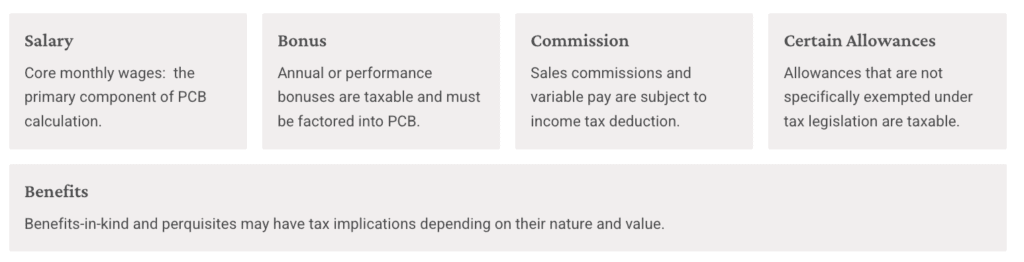
Payments Requiring Tax Consideration:
HRD Corp Levy: Human Resources Development Corporation — Employer Responsibility
Critical Distinction
HRD Corp Levy is an employer obligation, should not be deducted from employee wages, as it is an employer-borne levy.
This is a common source of confusion in payroll processing.

Why This Distinction Matters
Payroll Accuracy
Incorrectly deducting HRD Corp Levy from employee wages may result in payroll non-compliance and employee disputes.
Financial Reporting
HRD Corp Levy must be correctly classified as an employer cost in financial statements and payroll reports, separate from employee deductions.
Employee Communication
Clear payslip design ensures employees understand their deductions and are not confused by employer-borne statutory costs.
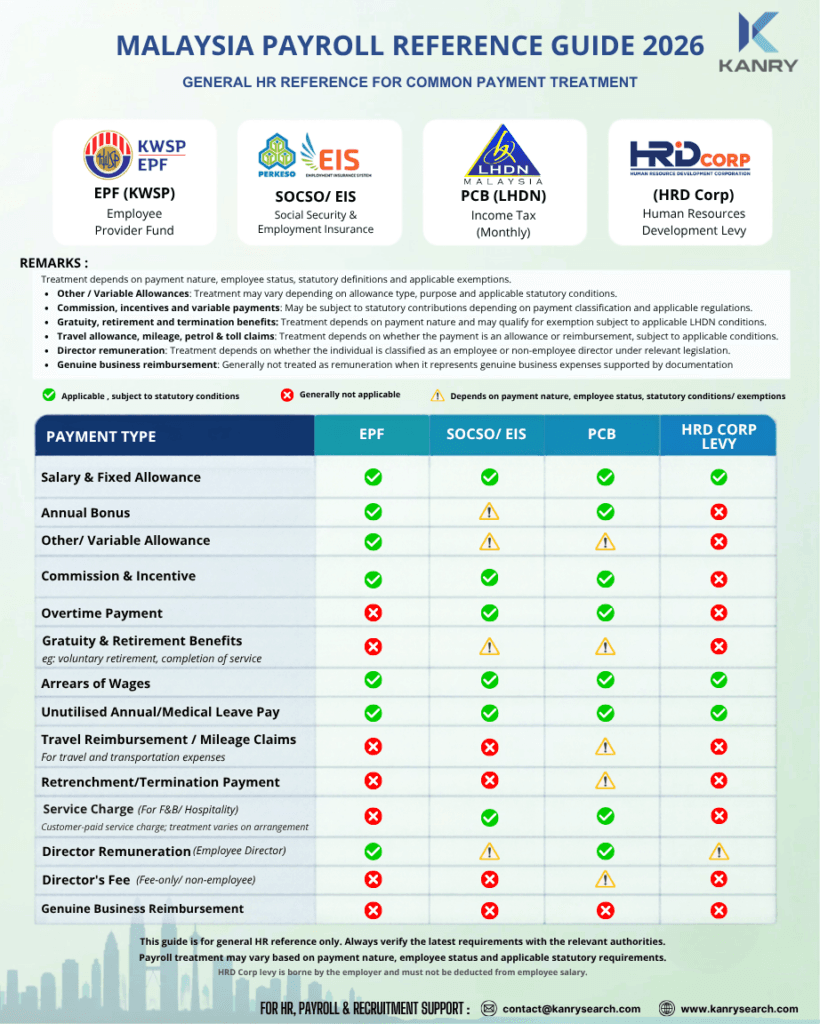
Payroll treatment may vary depending on:
- Employee status
- Payment structure
- Applicable exemptions
- Latest statutory requirements
Employers should verify the latest requirements with the relevant authorities.
Allowance vs Reimbursement
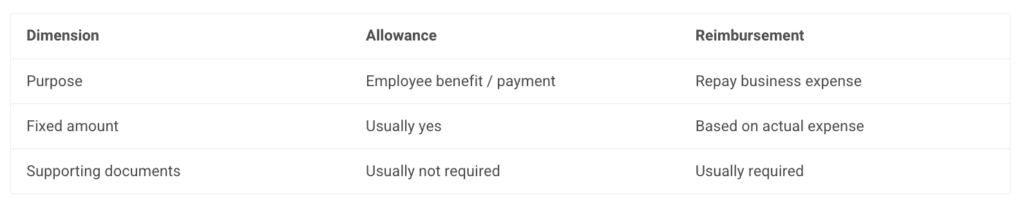
Travel-related payments are frequently lumped together, but the purpose of the payment determines its classification, not the label on the payslip.
Scenario A: Transport Allowance
Employee receives a Monthly Transport Allowance of RM500 — paid every month regardless of actual travel undertaken.
This is a fixed benefit paid as part of the employment package. It is not tied to any specific business trip or expense incurred.
Payroll Considerations:
- Review whether the payment forms part of employment remuneration
- Consider the purpose, regularity and contractual basis of the allowance
- Assess treatment across applicable statutory requirements (EPF, SOCSO/EIS, PCB) based on the payment structure
Scenario B: Travel Reimbursement
Employee travels for a client meeting and submits claims: Petrol RM150 · Toll RM50 · Parking RM30 · Total: RM230
This repays an actual business expense incurred on behalf of the company, supported by receipts.
Payroll Considerations:
- Determine whether the payment is reimbursement of genuine business expenses
- Review supporting documentation and company policy
- Distinguish reimbursement from employee benefits
Key Difference at a Glance:
Annual Bonus
A bonus paid once a year is still a payment arising from the employment relationship. Frequency of payment does not determine its classification.
Scenario
Employee receives an Annual Performance Bonus of RM15,000.
Common HR Question: “It’s only paid once a year. Does it count?”
Consideration
Bonus payments are commonly linked to:
- Company Performance
- Individual Performance
- Employment Relationship
Payroll Considerations:
- Review whether the payment arises from the employment relationship
- Frequency alone does not determine classification
- Consider applicable statutory treatment
Reminder: One-time payment does not automatically mean it is excluded. Payment nature matters.
Sales Commission
Commission is often perceived as a performance incentive separate from “real” salary, but its classification depends on how it is structured and paid, not what it is called.
Scenario: Sales Executive Package
Basic Salary: RM4,000 (Fixed monthly component)
Monthly Commission: RM5,000 (Variable performance component)
Total Earnings: RM9,000 (Combined monthly package)
Common HR Question: “Commission is incentive, not salary. Is it treated differently?”
Consideration
Commission is usually:
Linked to employee performance
It arises directly from the employment relationship and the employee’s work output.
Paid as part of employment earnings
It is received by virtue of being an employee, not as a separate business arrangement.
HR Reminder to Review:
- Commission structure and how it is calculated
- Frequency of payment (monthly, quarterly, ad hoc)
- Employment terms and contract language
Overtime Payment
Overtime is often treated as a supplementary or irregular payment, but its statutory treatment depends on how you classify and document it in your payroll framework.
Scenario: Production Operator
Basic Salary: RM2,300
Peak Production OT: RM800
Total: RM3,100
Common HR Question: “OT is an additional payment. Does it count?”
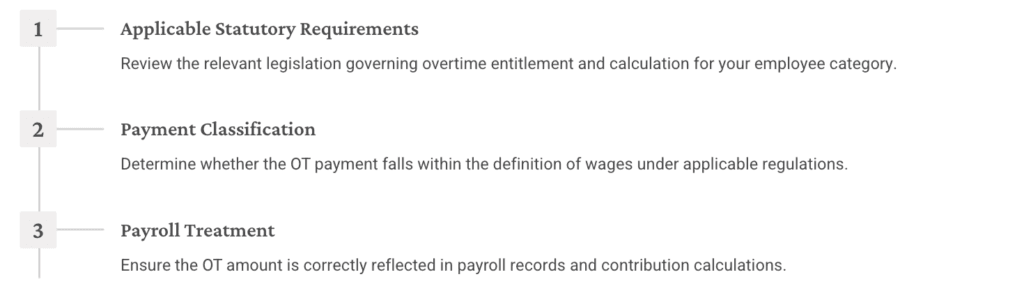
Consideration
Overtime should be reviewed based on:
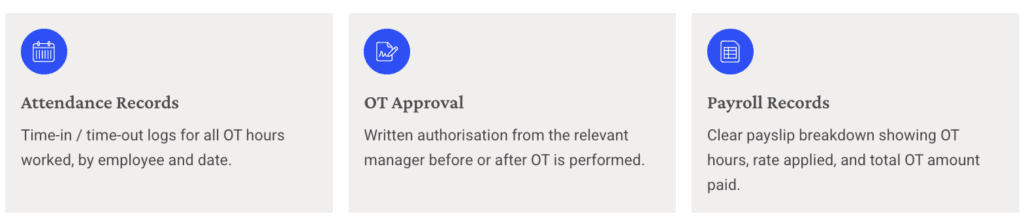
HR Best Practice: Keep These Records
Shift Allowance / Attendance Allowance

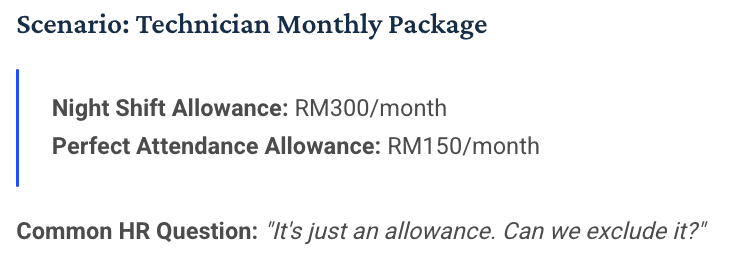
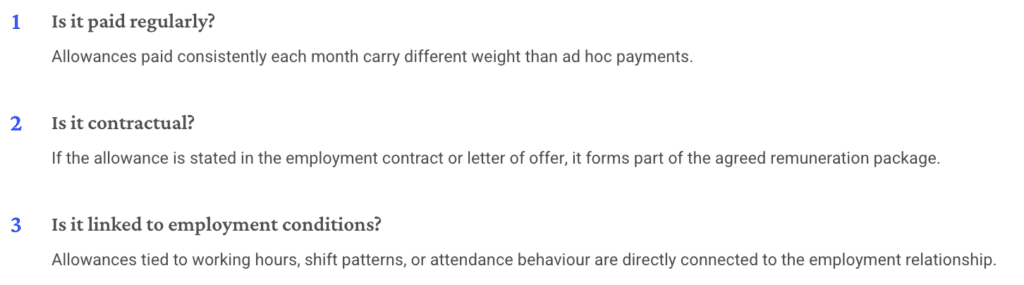
Not all allowances are equal and assuming they are is one of the most frequent errors in manufacturing payroll. The regularity, contractual nature, and linkage to employment conditions all influence how an allowance should be treated.
HR Should Review These Questions:

Quick Reference Summary
Use this table as a first-pass checklist when reviewing payroll items.
Each payment type carries its own set of questions, the right answer depends on the specific structure, frequency, and contractual basis of the payment.
| Payment Type | Common HR Question | Key Consideration |
| Fixed Allowance | “Is it part of salary?” | Review purpose, regularity, and whether it is contractual or discretionary. |
| Reimbursement | “Is every claim taxable?” | Distinguish between repaying a business expense vs. paying an employee benefit. |
| Bonus | “It’s yearly, does it count?” | Frequency does not determine classification. Payment nature and linkage to employment matter. |
| Commission | “It’s incentive, not salary?” | Review commission structure, payment frequency, and employment contract terms. |
| OT Payment | “Extra payment, can exclude?” | Apply applicable statutory requirements and maintain complete attendance and approval records. |
| Shift Allowance | “It’s only allowance, right?” | Assess regularity, contractual basis, and linkage to employment conditions before classifying. |
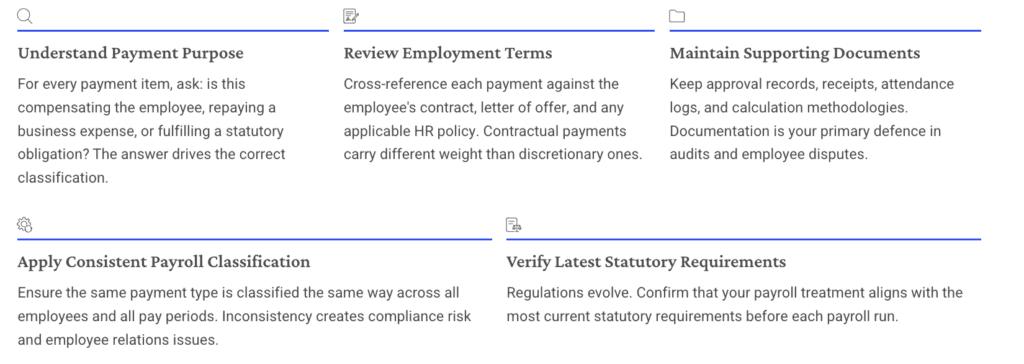
Payroll Checklist for HR Teams
Before processing payroll each cycle, run through this checklist to reduce misclassification risk and maintain consistent, defensible payroll records.
At Kanry, we support businesses with flexible workforce and payroll solutions, allowing HR teams to focus on strategic priorities while we manage operational requirements.
Contract Staffing & Payroll Parking Services
For companies requiring additional manpower support without increasing internal employment administration, Kanry provides flexible contract workforce solutions tailored to business needs.
Our solutions include:
✓ Contract employee hiring and deployment
✓ Temporary and project-based workforce support
✓ High-volume manpower solutions
✓ Payroll parking arrangement for contract employees
✓ Employment documentation and statutory contribution management
Whether you require short-term workforce expansion or ongoing manpower support, our team helps manage the employment process from onboarding to payroll administration.
Payroll Management Services (Payroll Outsourcing)
Payroll administration requires accuracy, confidentiality and compliance with statutory requirements.
Kanry supports companies by managing essential payroll processes, allowing internal HR teams to focus on employee engagement, talent management and business growth.
Our payroll support includes:
✓ Monthly payroll processing
✓ EPF, SOCSO, EIS & PCB (MTD) administration
✓ Salary calculation and payroll documentation
✓ Employee records management
✓ Statutory compliance support
Whether you require additional manpower support, contract workforce management or payroll outsourcing assistance, Kanry provides reliable and compliant workforce solutions to support your business growth.
📩 Contact us today to discuss your manpower and payroll requirements.
References
Employees Provident Fund (EPF / KWSP)
Official Website:
KWSP Employer Information
Employer responsibilities, contribution requirements and wage definitions can be found through KWSP’s employer resources. KWSP
Social Security Organisation (SOCSO / PERKESO
Official Website:
PERKESO Official Website
For information on SOCSO contributions, Employment Injury Scheme and Employment Insurance System (EIS).
Employment Insurance System (EIS)
Official Website:
PERKESO Employment Insurance System (EIS)
Inland Revenue Board Malaysia (LHDN) – PCB / Monthly Tax Deduction
Official Website:
LHDN Official Website
For PCB calculation guidelines, tax treatment of employment income and applicable exemptions.
HRD Corp (Human Resources Development Corporation)
Official Website:
HRD Corp Official Website
For information relating to employer levy requirements, registered employers and training fund contributions.