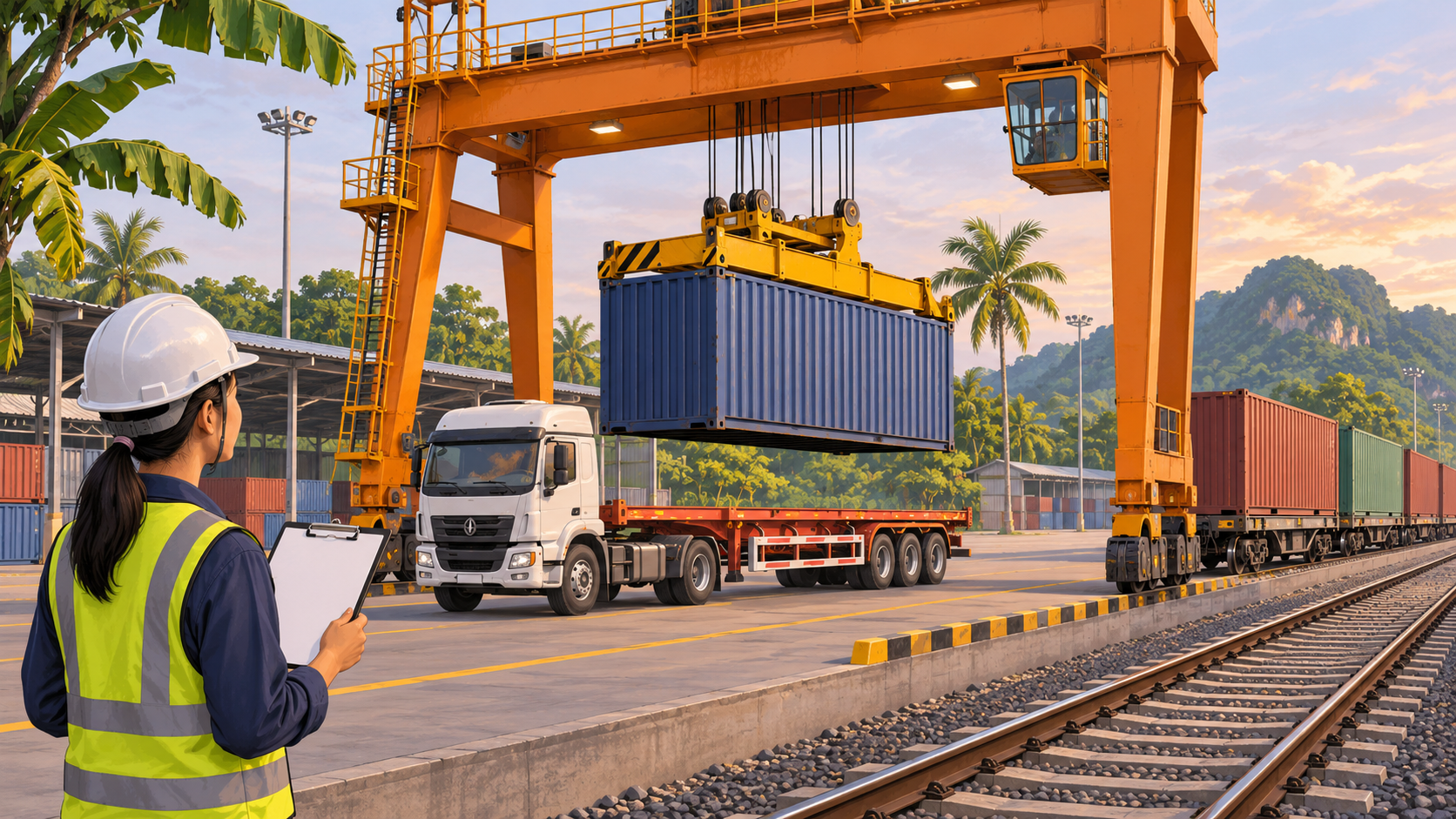

ECRL Phase 1 has been handed over to Malaysia Rail Link (MRL), and passenger trial operations began on 7 November 2026. The completed section runs between Kota Bharu, Kelantan, and Gombak, Selangor. For a manufacturer considering rail freight, the useful question is how the first and last truck legs would connect to a fixed train departure.
Bernama’s 7 November report, citing the project parties’ statement, says the trial programme runs until 2 December and is designed to test passenger services. The Phase 1 handover includes combined passenger and freight terminals, but the Gombak–Port Klang extension remains part of Phase 2. The trial therefore marks progress on the railway without establishing a commercial cargo timetable or a direct rail connection to Port Klang today.
A rail shipment adds a deadline at the terminal
A truck booked directly from a plant to a customer can often depart as soon as the cargo is ready. A shipment that includes a rail leg may need to arrive at a terminal by a particular time. Before that point, the shipper may need to complete load checks, confirm that the container or wagon is suitable and pass the information the terminal needs to accept the cargo.
That changes where the logistics team needs coverage. If the plant releases goods late or a record is incomplete, the decision may be whether to use a road fallback or wait for the next available rail service. That decision can involve the warehouse, the transport planner and the customer service team. An employer can work out now who has the authority to make it and which details they need before they act.
The same issue applies at the receiving end. A lower price for the rail leg tells the buyer little about the cost of an uncollected container, an extra truck movement or a missed customer slot. The time to measure is from factory release to delivery, including the hours spent waiting for transfer.
Start with one freight lane
MRL’s joint announcement with EPIC Berhad describes a memorandum to explore rail integration around the Kemaman Port spur, including the handling requirements of different types of bulk cargo. The agreement shows why an operating model has to be built around particular cargo and terminals. It does not establish that a given service is available to book.
A shipper can test readiness by selecting one recurring lane with reasonably predictable volumes. Map the collection and delivery legs, record who can confirm each transfer and agree how the team will respond when the cargo misses a cut-off. When operators publish service details, the employer can compare that plan with the actual booking rules and test whether the people on duty can handle a missed connection.
This is a different workforce decision from hiring more drivers or planners across the whole network. It starts with staffing the moments when responsibility for cargo changes hands. The Phase 1 milestone makes it worth doing that work now, ahead of any decision to shift freight off the road.
Hiring for rail or intermodal freight operations? Contact Us to discuss the roles you need to fill.