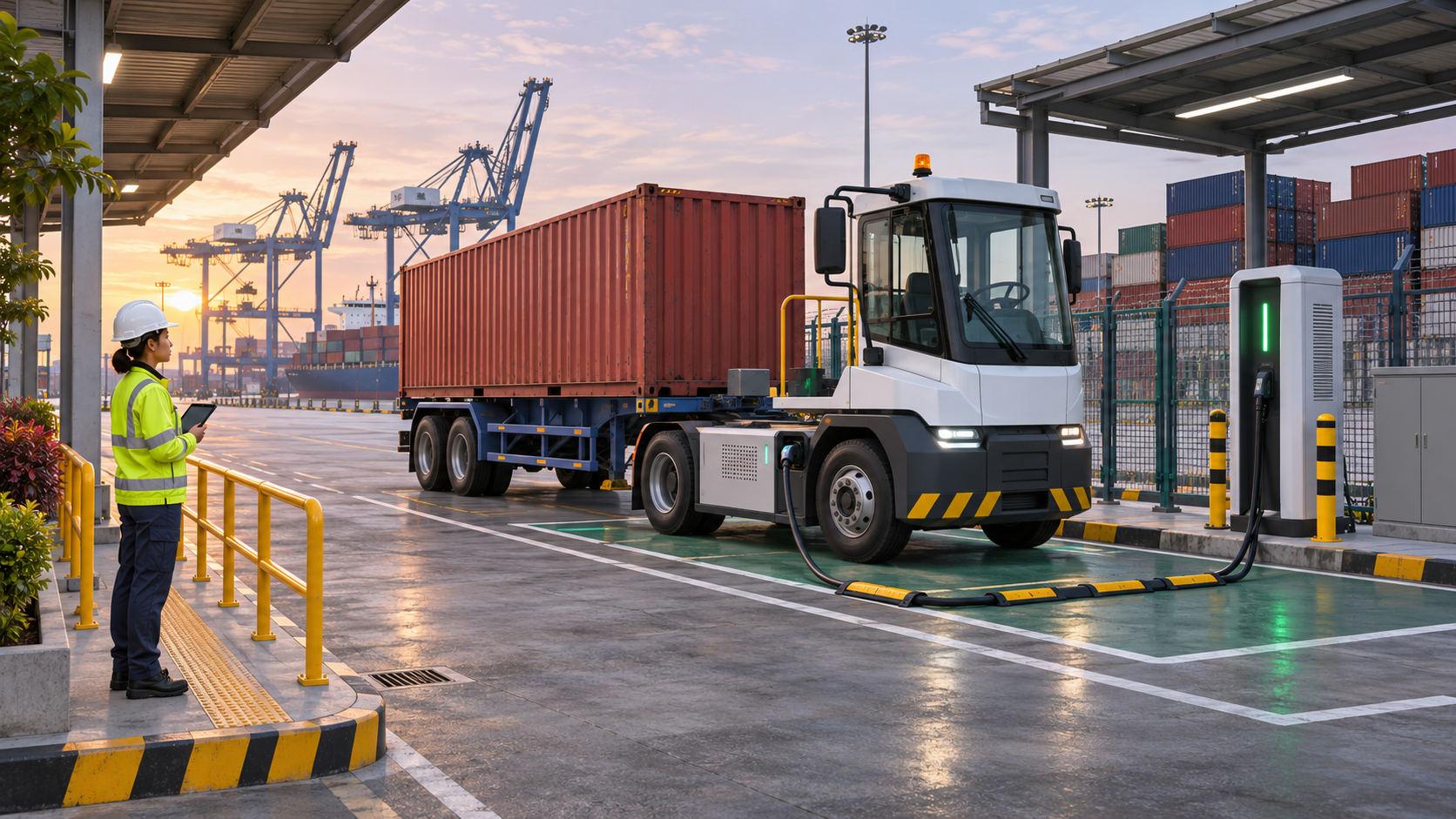

The Port of Tanjung Pelepas completed the rollout of 52 electric terminal tractors in October 2026. The vehicles move containers within the Johor terminal. Their introduction changes one practical decision for employers operating a mixed fleet: how many tractors, drivers and support staff can be committed to container movements while vehicles cycle through charging?
The port’s 8 October rollout update says the 52 electric tractors are part of a 94-vehicle order. The remaining 42 use conventional fuel. Terberg Tractors Malaysia is providing maintenance for the electric fleet for 24 months. MMC Ports’ August commissioning release confirms the first 21 entered service on 11 August for container movements inside the terminal. Neither announcement gives the port’s charging schedules or the share of moves allocated to each powertrain.
Count vehicles that can take the next assignment
A tractor can be on site and mechanically sound while it is unavailable to dispatch. It might be charging, waiting for a bay or assigned a move that will carry it through a busy changeover. Adding its name to the shift roster does not create another vehicle for the next quay or yard assignment.
Charging time is therefore part of labour planning as well as equipment planning. If several drivers bring vehicles to charge at the same point in a shift, dispatch needs a workable alternative. Drivers may need another eligible vehicle. Yard supervisors need to know which moves can wait. The person responsible for the charging area needs to tell dispatch when a slot or vehicle will be available again.
For an operator evaluating its own fleet, the useful record is the number of dispatch-ready tractors by time band, alongside the reasons others are unavailable. Separate planned charging from a wait for a bay, a vehicle fault or a shortage of trained drivers. These causes can produce the same drop in capacity while requiring different responses.
Plan what remains in-house during supplier support
The maintenance agreement gives the Tanjung Pelepas fleet a defined period of supplier support. Employers considering a similar contract can use that period to decide which capabilities their own shifts need. Safe reporting, isolating equipment under site procedures and arranging a replacement are distinct responsibilities from diagnosing or repairing the vehicle. Each should have an owner when the regular workshop team is away.
The operator can test this division with a familiar demand peak. Identify the hour when several tractors are likely to need charging, then check what happens if one bay is unavailable. Can the dispatcher see which assignments can be moved, which vehicles and trained drivers can take them, and who will coordinate the vendor response?
A fleet purchase establishes the equipment available to the terminal. The operating plan needs a narrower measure: how many safe container moves the staffed fleet can make when charging, maintenance and demand overlap.
Need help hiring supply chain and logistics talent in Malaysia? Contact Us to discuss your hiring plans.