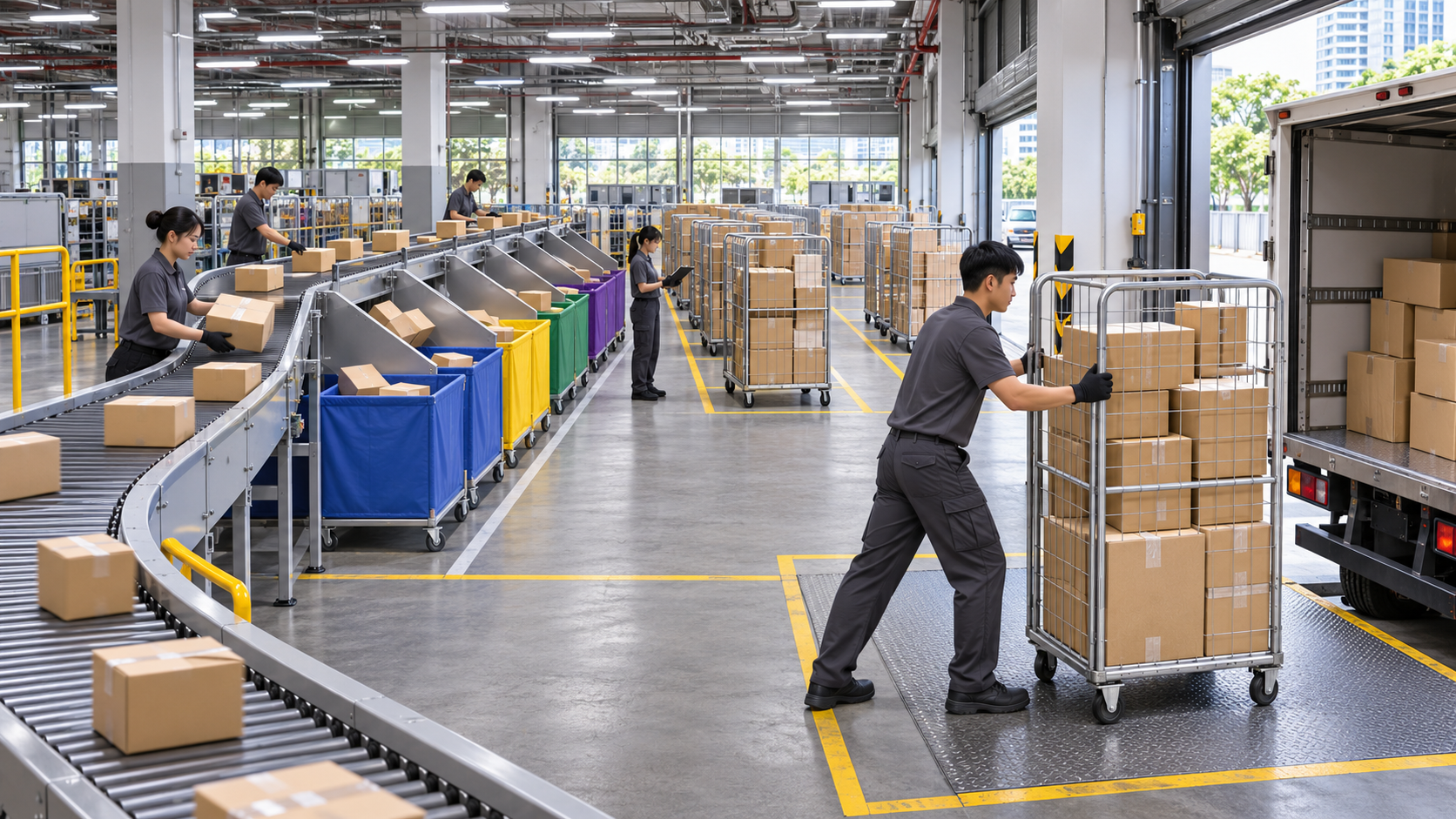

SingPost’s Tampines sortation hub gives Singapore logistics employers a useful way to think about seasonal capacity. A faster sorter can process more parcels over a day. A delivery network still needs those parcels staged and loaded before individual vehicles leave.
SingPost’s 9 June 2026 launch release describes a S$30 million investment at its Regional eCommerce Logistics Hub in Tampines. It says small and medium parcel processing capacity rises from 100,000 to 300,000 parcels a day. Together with existing large-parcel operations, it puts the site’s daily capacity at 400,000 parcels. The company also consolidated sorting previously split between Paya Lebar and Tampines, reducing the need for cross-island trucking between the two locations. These are capacity and network changes, rather than figures for parcels actually processed on a particular day.
Work back from the last vehicle departure
A daily count can hide whether the network met its delivery commitments. A parcel might pass through the sorter on time and still miss its route if it sits in staging after the scheduled vehicle leaves. The staffing question becomes which parcels need to be ready for each departure and whether the team can assemble those loads at the rate that sorting releases them.
Warehouse operators can work backwards from one departure that regularly runs close to its cut-off. Check when the last parcels reach staging, how long it takes to close the route load and which handovers depend on the same small group of employees. A team measuring only the sorter’s output may never see the minutes lost while people wait for a cage, a loading position or confirmation that a route is complete.
This becomes particularly relevant when a consolidated site handles multiple parcel sizes. A small item, a bulky parcel and a consignment that requires manual handling may consume different amounts of space and labour even when each counts as one piece. Planning departure coverage around route mix gives the shift lead a more useful picture than a total parcel count alone.
Decide where peak headcount adds capacity
In a 16 September interview published by SGX, SingPost CFO Isaac Mah discussed expanding sorting capacity and reducing the cost of handling existing volumes. He also highlighted how doorstep delivery can be more time-intensive than delivery through letterboxes. The two observations are linked: a distribution network can process more items centrally while still needing enough time and people to serve the destinations those items are going to.
For a peak roster, compare parcels sorted per hour with parcels staged before their route cut-off. If sorting is on plan while departures slip, look at loading-bay coverage, route preparation and driver start times before assigning more labour to the conveyor. If the routes leave on time but first-attempt delivery becomes harder to complete, check the work built into those routes.
The practical value of faster sorting is measured beyond the machine. The staffing plan needs to turn the extra processing capacity into parcels ready for the vehicles and routes that can deliver them.
Looking for recruiters who specialise in supply chain hiring in Singapore? Contact Us to discuss your hiring plans.