
Malaysia’s semiconductor ambitions are entering a more demanding phase. The question is no longer simply whether the country can attract advanced manufacturing investment. It is whether its industrial workforce can turn that investment into reliable production.
Ferrotec’s second manufacturing plant in Kulim, Kedah, offers a timely test.
Officially opened on 28 October 2026, the facility adds nearly one million square feet of highly automated manufacturing space, designed to accommodate more than 700 high-precision computer numerical control (CNC) machines alongside connected production systems and autonomous guided vehicles.
According to the Malaysian Investment Development Authority’s 5 November announcement, the expansion is expected to generate more than 1,000 high-value jobs for Malaysian engineers, technicians and production specialists.
But the most revealing detail may be its timetable: Ferrotec is targeting a capacity ramp-up in the first quarter of 2027 and full production by the second.
That places the workforce challenge in a much sharper context. A new factory needs more than people to operate equipment. It needs teams capable of converting sophisticated machinery into consistent, commercially reliable manufacturing output.
The semiconductor jobs that sit behind the chips
Semiconductor employment is often discussed in terms of chip fabrication, assembly, testing and packaging. Ferrotec’s expansion highlights an equally important part of the industry: the precision components and materials used in semiconductor manufacturing equipment.
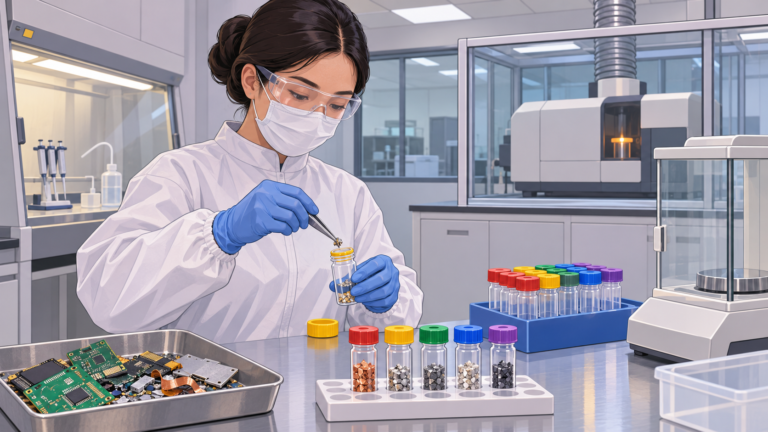
Its Kulim operations encompass quartz fabrication, advanced ceramics, precision metal manufacturing and electromechanical assembly.
These are technically distinct from conventional electronics assembly activities.
Ferrotec’s own product documentation explains how high-purity quartz components are used in semiconductor processes involving heat, chemicals and wafer handling. Its advanced ceramics business supplies precision components for applications demanding material purity, rigidity and dimensional accuracy.
Such components may be physically small relative to an entire manufacturing system, but their performance matters because the equipment they support operates under demanding process conditions.
This changes the nature of the workforce requirement.
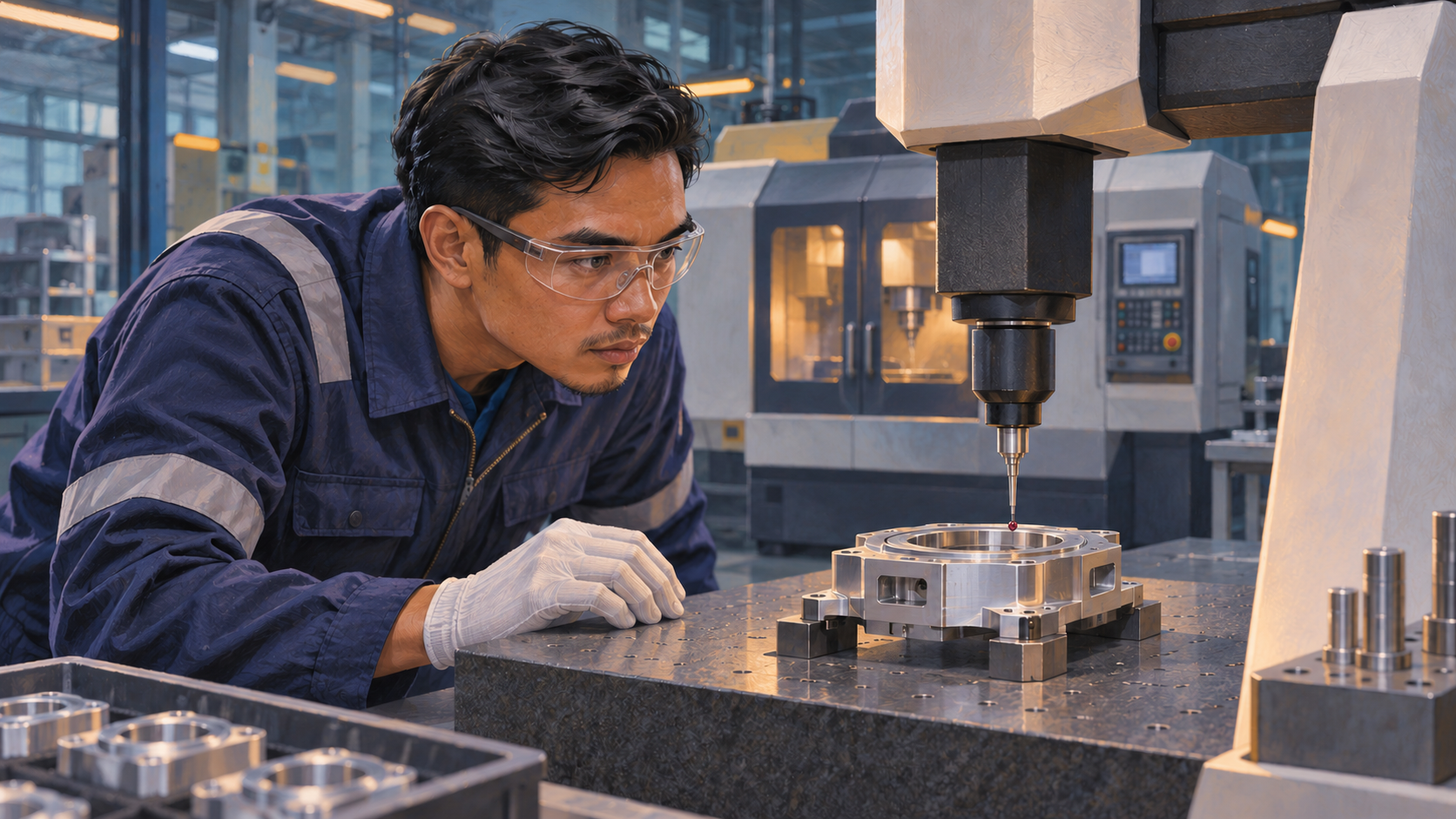
A company producing precision semiconductor equipment components needs expertise not only in operating machines but also in material behaviour, process engineering, dimensional measurement, quality assurance and production consistency.
For an employer, the distinction is substantial. Experience in general manufacturing does not automatically translate into the ability to produce high-purity components to demanding technical specifications.
Malaysia’s move into higher-value semiconductor activities therefore involves developing new industrial capabilities, not simply expanding the number of people employed in electronics.
The difficult transition from installed equipment to repeatable output
Ferrotec’s first Kulim plant began operations in January 2024. With the second facility, cumulative investment across the two plants has reached approximately RM1.9 billion, according to MIDA.
This is an expansion of an operating industrial base rather than an investment proposal still awaiting its first production activity.
Yet a factory opening and a production ramp-up represent different milestones.
Installing sophisticated CNC machinery establishes potential capacity. Achieving repeatable manufacturing performance requires processes that remain stable across machines, shifts, batches and operators.
That is where the human contribution becomes particularly important.
CNC programming, process adjustments, preventive maintenance, measurement systems and quality investigations must function together. A deviation discovered during inspection may require technical intervention that crosses several departments.
Highly automated production does not eliminate these responsibilities. It changes where technical judgment is concentrated.
This is the central workforce implication of Ferrotec’s expansion: the value of experienced manufacturing personnel increasingly lies in their ability to maintain process reliability, not merely supervise production volume.
The distinction matters during commissioning and early production, when equipment capability, operating procedures and workforce experience are still being aligned.
Ferrotec has not publicly disclosed the detailed staffing, training or commissioning arrangements for Plant 2. Nevertheless, its announced production timetable makes the interaction between equipment readiness and workforce capability a legitimate issue for the wider manufacturing sector.
Why the middle of the workforce matters
Malaysia has invested considerable attention in expanding its engineering talent pipeline.
In May 2026, MIDA outlined its semiconductor talent initiatives, including university-industry programmes, exposure to industrial automation and efforts to align technical education with advanced manufacturing requirements.
The same announcement included a particularly relevant observation from STMicroelectronics Malaysia’s head of human resources, Shahrom Tumin: smart factories and integrated production systems increasingly require engineers and technicians who combine technical competence with digital fluency and adaptability.
This is not merely a question of graduating more engineers.
There is a difference between possessing an engineering qualification and having sufficient production experience to diagnose a recurring process deviation, understand equipment behaviour or establish reliable manufacturing methods.
Evidence from the wider Malaysian employment market suggests experienced talent can be difficult to secure.
In its April 2026 skills-shortage findings, recruitment firm Hays reported that 56% of surveyed organisations struggled to recruit intermediate-level employees, compared with 17% citing entry-level positions. The survey covers the broader employment market, not Ferrotec or semiconductor manufacturing specifically.
For wider pay context, see Malaysia Salary & Wage Trends 2025.
Nevertheless, it highlights a relevant structural risk: industrial expansion can increase demand for experienced employees faster than new entrants can acquire comparable practical capability.
This is especially consequential when several advanced manufacturers operate within the same regional industrial ecosystem.
A factory can add production equipment relatively quickly once its investment is committed. Developing the experience needed to use that equipment consistently may follow a different timetable.
Malaysia’s next industrial advantage will be measured in execution
The implications extend beyond Ferrotec.
Malaysia’s National Semiconductor Strategy seeks to strengthen the country’s position in higher-value activities. MIDA has also placed emphasis on integrating domestic suppliers into advanced manufacturing supply chains.
But attracting a multinational manufacturer is only one part of building that ecosystem.
Local component producers, engineering firms and supporting manufacturers must be able to meet the technical and delivery expectations associated with sophisticated production systems.
For a potential supplier, that means demonstrating consistent process capability, dependable inspection and traceability, and the ability to respond when manufacturing requirements change.
These are not guaranteed outcomes of a new investment. They must be established operationally.
Ferrotec’s expansion could create opportunities for surrounding industrial businesses, but the public announcement does not establish how much procurement will be sourced locally or which suppliers will benefit.
That distinction matters. Announced investment is measurable today; broader industrial upgrading must be demonstrated over time.
As Plant 2 moves toward its planned 2027 production milestones, the more meaningful indicators will be whether its capacity becomes operational, how technical capability develops and whether the supporting supply chain deepens.
The employment projection is important, but it is not the complete story. Nor should the announced creation of more than 1,000 jobs be interpreted as confirmation that the same number of vacancies is currently available.
For Malaysia’s manufacturing employers, Ferrotec’s new plant illustrates a wider transition. Industrial competitiveness is becoming increasingly dependent on the quality of knowledge embedded within production teams: the ability to understand complex materials, stabilise automated processes and sustain consistent output.
The next chapter of Malaysia’s semiconductor industry will not be written by factory openings alone.
It will be determined by what those factories—and the people working within them—can reliably produce.